
Celebrating a Milestone in Youth Climate Leadership and Urban Justice
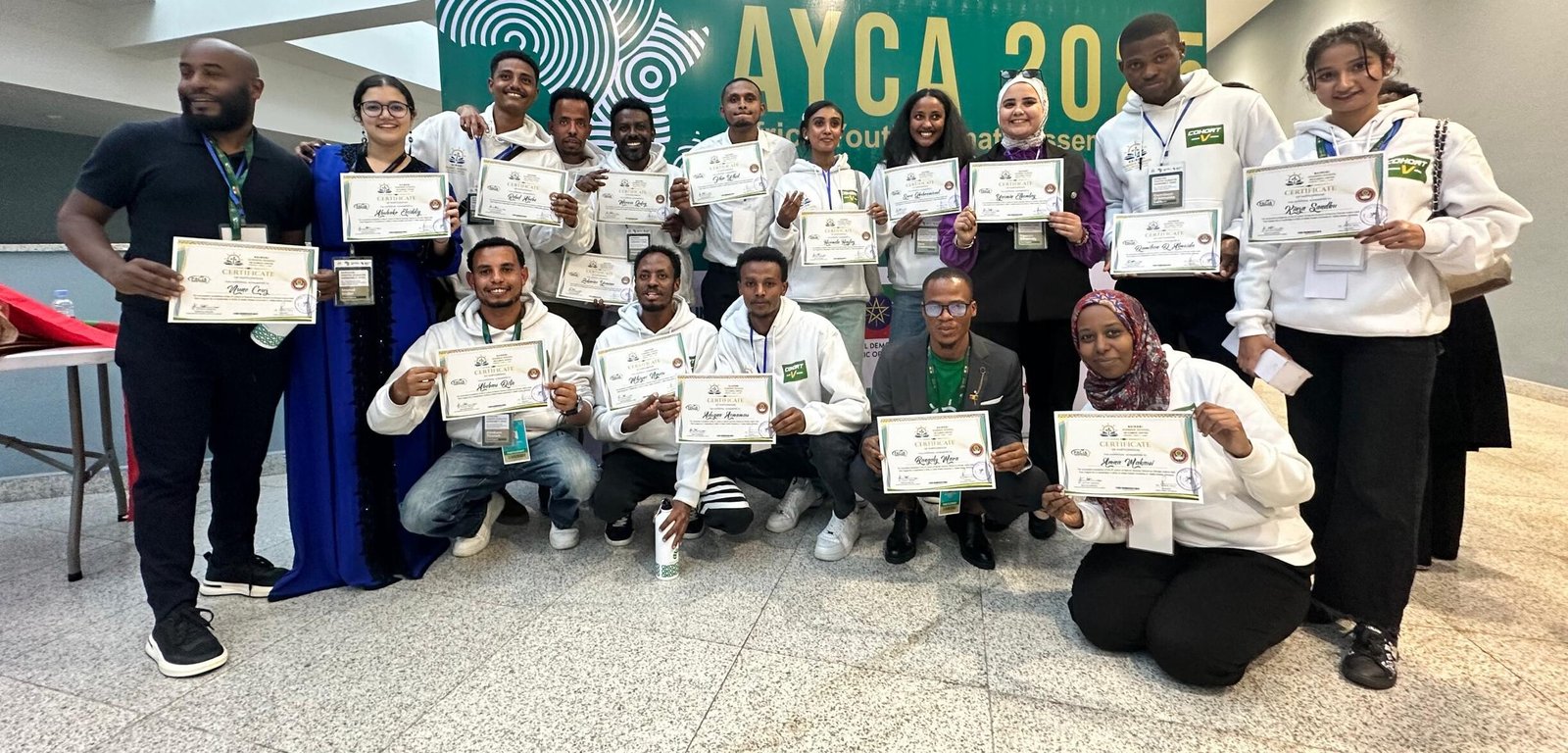
Over the course of two dynamic weeks, SCEJU youth beneficiaries from Kisumu, Nakuru, and Makueni joined over 200 young leaders from across the continent in Cohort V of the Nairobi Summer School on Climate Justice (NSSCJ)—Africa’s premier climate justice learning platform.
While the in-person cohort convened in Addis Ababa, Ethiopia, SCEJU beneficiaries actively participated virtually through the customised e-learning platform, completing modules, contributing to group discussions, and exploring the continent’s most pressing climate challenges—from just transitions to circular economies.
A Deep Dive into Climate Justice
Cohort V featured robust modules ranging from:
- Climate Finance & Just Transition
- Global Climate Negotiations
- Green Entrepreneurship & Circular Economy
- Policy Advocacy & Urban Resilience
SCEJU participants engaged deeply in topics directly linked to their lived realities, especially in informal urban settings where access to clean water, safe sanitation, and waste justice remains a daily challenge. Interactive sessions—including mock COP negotiations, peer group tasks, and solution-mapping—equipped learners with practical skills to advance climate justice advocacy at local levels.
SCEJU’s Contribution to a Continental Movement
For the SCEJU community, this learning journey was more than just academic. It reflected a broader commitment to preparing young leaders to address the triple crisis of climate change, pollution, and biodiversity loss—particularly through the lens of urban sustainability and governance.
Modules on the circular economy resonated with ongoing community campaigns under the YoSUDA digital platform, while discussions on energy transitions and waste justice aligned with SCEJU’s Training of Trainers (ToTs) and the FSTP-funded pilot projects led by local organisations.
A Virtual Graduation with Real-World Momentum
On September 6, 2025, SCEJU participants joined the virtual graduation of NSSCJ Cohort V, marking the culmination of their learning with a shared commitment to action, accountability, and amplified advocacy.
Equipped with knowledge and a pan-African network, they now re-enter their communities as trained digital climate advocates—ready to lead campaigns, engage policymakers, and influence public discourse on climate justice, water governance, and circular economies.
What’s Next
With foundational knowledge in place, the next chapter focuses on local action and sustained engagement. SCEJU will continue nurturing these emerging voices through ongoing mentorship, thematic learning, and integration into ongoing county and community-level workstreams. The goal is to strengthen their roles as changemakers in advancing circular economy models, climate-responsive urban planning, and inclusive waste and water governance.
These young leaders return to their spaces not only informed—but activated.