
Introduction
The Strengthening Civil Society Engagement for a Just and Sustainable Urbanization (SCEJU) Project, co-funded by the European Union, is reshaping Kenya’s urban landscape by empowering grassroots actors to lead in sustainable water and waste management. Implemented by Friedrich-Ebert-Stiftung (FES-Kenya), the Civil Society Urban Development Platform (CSUDP), and the Pan African Climate Justice Alliance (PACJA), the project places a special focus on youth and women in Kisumu, Nakuru, and Makueni Counties.
With urban informal settlements hosting over 60% of Kenya’s urban population and challenges like inadequate water access and poor waste management disproportionately affecting women and youth, SCEJU’s interventions are essential for building climate-resilient, inclusive cities.
Advancing Capacity through Targeted Trainings
A cornerstone of SCEJU’s strategy is Training of Trainers (ToTs) workshops, designed to empower community leaders and local waste and water actors. These trainings build technical skills, advocacy competencies, and community organizing capacity.
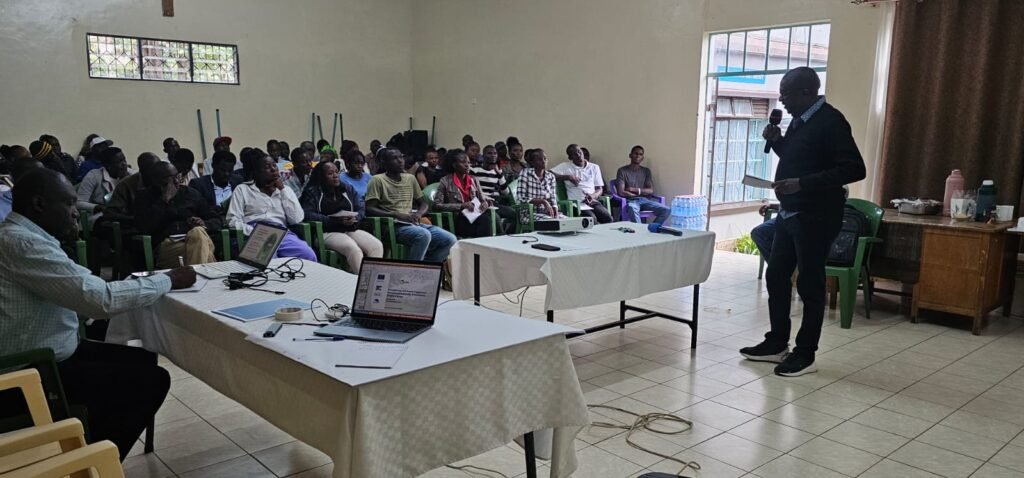
In Kisumu County, SCEJU recently hosted a comprehensive Water ToTs Training at St. Stephen’s Old Cathedral Hall. The training equipped 59 participants with knowledge on water governance, policy frameworks, and practical skills to champion sustainable water management in their communities. Modules covered included the National Water Act (2016), water quality monitoring, and community-based solutions for equitable access.
In Makueni County, SCEJU facilitated a successful Focus Group Discussion (FGD) at Parisso Hotel in Wote with youth and women from across the county. The FGD provided a platform to gather insights on local water and waste challenges while strengthening community networks for future collaboration. The dialogue emphasized the importance of gender inclusion and local leadership in driving sustainable urbanization.
Nakuru County saw the implementation of an intensive ToTs Training at the Kenya National Library Services Conference Hall, attended by 17 participants. This training focused on the Sustainable Waste Management Act (2022), circular economy principles, and strategies for effective community advocacy. Participants engaged in role-plays, case studies, and interactive modules to enhance their understanding of local governance structures and their roles in shaping policy.
Prioritizing Women and Youth Leadership
Women and youth in Kenya’s informal settlements face unique challenges: women shoulder the bulk of household waste management responsibilities, while youth often lack formal employment opportunities. SCEJU addresses these gaps through training modules on leadership development, digital advocacy, and inclusive governance.
The YoSUDA e-learning platform, another key SCEJU component, provides targeted courses on digital campaigning, sustainable water and waste management, and personal branding, ensuring young leaders can engage effectively at the local and national levels.
Driving Policy and Governance Transformation
SCEJU’s approach goes beyond training: it fosters policy change through community engagement and advocacy. Participants learn to navigate Kenya’s legal frameworks, including the Environmental Management and Coordination Act and the Sustainable Waste Management Act (2022). This knowledge empowers them to design effective petitions, engage policymakers, and drive sustainable urban reforms from the ground up.
Conclusion
SCEJU is building a new generation of community leaders who are not only equipped with technical skills but also empowered to influence policy and governance. Co-funded by the European Union and implemented by Friedrich-Ebert-Stiftung (FES-Kenya), CSUDP, and PACJA, the project’s innovative approach—combining trainings, FGDs, and digital learning—ensures that Kenya’s urban future is inclusive, sustainable, and just.